
White Rock Conservation Park
White Rock Conservation Park
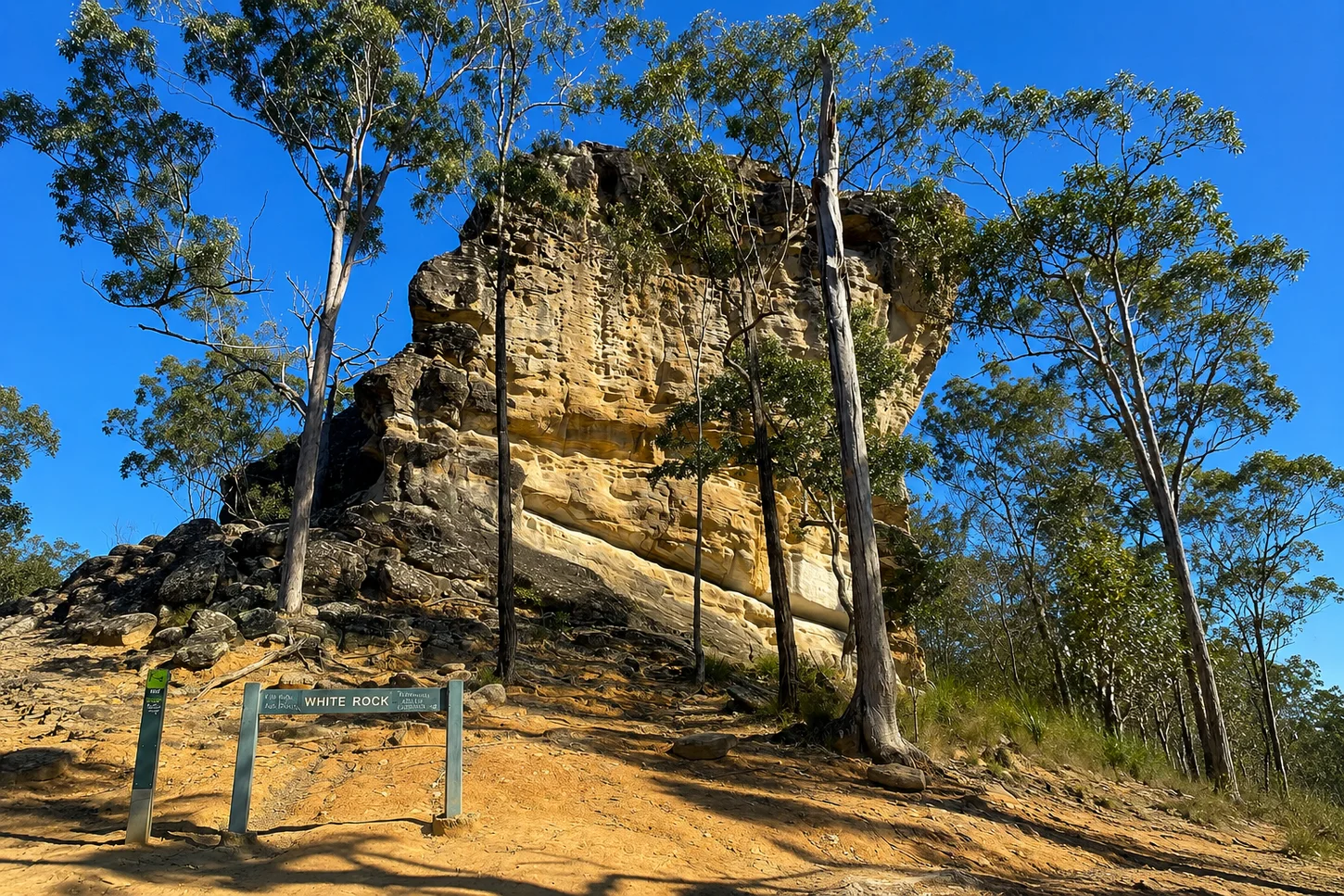
If you’re staying in Ipswich and looking for a proper outdoor adventure without having to drive hours from the city, White Rock is worth putting at the top of your list. Formally known as the White Rock – Spring Mountain Conservation Estate, this protected area covers more than 2,500 hectares of natural bushland on the southwestern edge of Greater Brisbane. It is one of the largest conservation estates close to Ipswich and offers a mix of walking trails, mountain biking, horse riding, and outstanding wildlife viewing — all within a short drive of the city centre.
For guests staying at Central Motel Ipswich, it makes an easy and rewarding day trip. You can be on the trail in under 30 minutes from the motel and back in time for a comfortable evening without the stress of a long journey. Whether you are visiting with family, a partner, or on your own, White Rock offers something worth experiencing.
Where Is White Rock Conservation Park?
White Rock – Spring Mountain Conservation Estate is located in Redbank Plains, a suburb in the City of Ipswich in southeast Queensland. It sits on the southwestern fringe of the Greater Brisbane urban area, making it accessible from both Ipswich and Brisbane without a long drive.
Getting there from Central Motel Ipswich:
- Approximately 25–30 minutes by car from Central Motel Ipswich
- Approximately 20 minutes from Central Ipswich
- Approximately 35 minutes from Brisbane CBD
The main entrance to the conservation estate is via School Road, Redbank Plains. The Paperbark Flats Picnic Area is the primary visitor hub and the best starting point for most walks and activities.
Facilities at the main entry area include:
- Free entry — no gate fees or day-use charges
- Ample car parking
- Public toilets
- Covered picnic shelters
- Drinking water (available at Paperbark Flats Picnic Area; carry your own supply as a backup)
- Horse float parking for riders bringing horses
For official trail maps and current park information, visit the White Rock – Spring Mountain Conservation Estate page on the Ipswich City Council website.
Why White Rock Is One of Ipswich’s Best Outdoor Destinations
Most suburban parks near the city offer a grassy oval, a playground, and maybe a short walking loop. White Rock is something quite different. The conservation estate protects a large stretch of native bushland featuring dramatic sandstone ridges and escarpments, open eucalypt forest, sheltered gullies, and elevated ridgelines with wide views across the region.
What makes it stand out:
- Size and diversity — With over 2,500 hectares to explore, there is genuine variety across the landscape rather than a single repeated environment.
- Trail options — Walks range from short, flat family-friendly tracks to longer, more demanding routes for experienced hikers and trail runners.
- Wildlife — The estate supports a rich community of native animals, with real opportunities to spot kangaroos, wallabies, lizards, and a wide range of native birds in their natural environment.
- Peace and quiet — Even on weekends, the size of the estate means you can find sections of trail with few other people around.
- No entry fees — It is entirely free to visit, making it a great option for families or budget-conscious travellers.
For anyone staying at Central Motel Ipswich and wanting to see what the Ipswich region looks like beyond the CBD, White Rock gives a clear answer.
The Cultural Importance of White Rock
Before visiting, it is worth understanding the cultural significance of this place. White Rock, known as Nugum or Boogun in the language of the Traditional Owners, is a sacred site for the Yuggera and Ugarapul peoples, the Aboriginal nations whose Country covers the Ipswich and surrounding region.
The site holds particular importance as a women’s cultural area, and it carries deep spiritual, ceremonial, and historical meaning for the Traditional Owners. The conservation estate was formally established in recognition of both its ecological and cultural heritage values.
Visitors must not climb White Rock. This is not simply a safety rule — it is a matter of cultural respect. Climbing the rock is prohibited because it is a protected sacred site under Queensland’s Aboriginal Cultural Heritage Act. The prohibition is clearly signposted at the park.
When you visit:
- Stay on marked trails
- Do not disturb or remove rocks, plants, or any natural materials
- Treat the landscape with the same respect you would want for places that matter to your own community
- Follow any signage relating to cultural heritage areas
Taking a moment to acknowledge the significance of the place before you set out on the trail is a simple and respectful gesture that many visitors appreciate.
Best Walking Trails at White Rock Conservation Park
The trail network at White Rock covers a range of distances and difficulty levels. Whether you are after a gentle 45-minute stroll or a half-day hike, there is a route that will suit you. Trails are generally well-marked, though carrying a downloaded map or screenshot before you go is always a good idea given mobile reception can be patchy in some sections.
Little White Rock Track
This shorter walk is a good starting point for families or anyone visiting for the first time. The track leads through native bushland to views of the iconic White Rock sandstone formation, giving you a close-up look at the geological feature that gives the conservation estate its name. The route is relatively flat and manageable for children, making it a popular choice for a relaxed morning out.
- Difficulty: Easy to moderate
- Great for: Families, first-time visitors, those with limited time
- Highlights: Sandstone rock formations, native bush scenery
White Rock Lookout Walk
Step up from the Little White Rock Track, the Lookout Walk takes you on a moderate hike through eucalypt bushland to elevated vantage points with panoramic views across the Ipswich region and surrounding landscape. On a clear day the views are genuinely impressive, and sunrise or late afternoon light makes for excellent photography conditions.
- Difficulty: Moderate
- Great for: Walkers wanting a proper hike with a rewarding view
- Highlights: Panoramic lookout, bush scenery, photography
Yaddamun Trail
The Yaddamun Trail is a longer walk that connects through the conservation estate, taking you deeper into the natural environment away from the main entry area. It is popular with experienced hikers and trail runners, and it is one of the better routes for wildlife spotting, particularly in the early morning when animals are most active.
- Difficulty: Moderate to hard
- Great for: Experienced walkers, wildlife enthusiasts, trail runners
- Highlights: Extended bush experience, wildlife encounters, varied terrain
Spring Mountain Trails
The Spring Mountain section of the estate offers some of the more challenging walking routes, covering longer distances through remote bushland. These tracks are best suited to fit and experienced walkers who are well-prepared with water, appropriate footwear, and a trail map. The reward is a quieter, more remote bush experience with fewer other visitors.
- Difficulty: Hard
- Great for: Fit, experienced hikers; those seeking a physical challenge
- Highlights: Remote bushland, fitness workout, solitude
Which Trail Is Right for You?
| Trail | Difficulty | Approx. Time | Family Friendly | Best For |
| Little White Rock Track | Easy–Moderate | 45–60 min | ✅ Yes | First-timers, families with children |
| White Rock Lookout Walk | Moderate | 1.5–2.5 hrs | ⚠️ Older children | Views, photography, active walkers |
| Yaddamun Trail | Moderate–Hard | 2–3 hrs | ❌ Not recommended | Experienced hikers, wildlife watching |
| Spring Mountain Trails | Hard | 3–5 hrs | ❌ Not recommended | Fit, experienced hikers |
Approximate times are based on average walking pace. Actual times will vary depending on fitness level, group size, and stops along the way.
Wildlife You May See at White Rock
White Rock – Spring Mountain Conservation Estate is home to a genuinely diverse range of native wildlife. The estate supports over 150 animal species, supported by large tracts of intact native vegetation that provide food and habitat for animals that are increasingly rare in urbanised areas.
Mammals you may encounter:
- Eastern grey kangaroos — commonly seen grazing in open grassy areas, especially early morning and late afternoon
- Swamp wallabies
- Echidnas — often spotted foraging through leaf litter
- Possums (primarily nocturnal)
Reptiles:
- Lace monitors (goannas) — large lizards occasionally seen crossing trails or foraging near logs
- Various skinks and other lizard species
Birdlife:
The birdwatching at White Rock is a highlight for many visitors. The diversity of native vegetation attracts a wide variety of species, including:
- Sulphur-crested cockatoos
- Rainbow lorikeets
- Kookaburras
- Wedge-tailed eagles and other raptors
- Honeyeaters, wrens, and other smaller bush birds
Koalas have been recorded in the conservation estate, though sightings are not guaranteed. Koala populations in the region are under pressure, and any sighting is a genuine privilege.
Wildlife sightings are never guaranteed, and animals will always behave on their own terms. Early morning is generally the best time to see the most activity. Move quietly, avoid approaching animals, and enjoy the experience from a respectful distance.
Mountain Biking at White Rock
White Rock has developed a strong reputation as a mountain biking destination in southeast Queensland. The estate has dedicated mountain bike trails that attract riders from across the region, offering a combination of single-track riding through native bush, technical sections, and longer endurance routes.
Key points for riders:
- Dedicated mountain bike trails are separate from some walking tracks, though shared sections exist
- On shared trails, cyclists must give way to walkers and horses
- Riders are encouraged to slow down and communicate clearly when approaching other users
- Helmets are mandatory at all times
- Carry sufficient water and a basic repair kit — mobile coverage can be unreliable in some areas
- Check trail conditions after wet weather, as some tracks may be closed to prevent damage
The mountain bike trail network is a key reason White Rock has grown its visitor numbers in recent years. For guests staying at Central Motel Ipswich who are travelling with bikes, it is a convenient and well-regarded option.
Horse Riding Opportunities
Horse riding is permitted at White Rock – Spring Mountain Conservation Estate on designated trails. The estate is one of relatively few natural areas near Ipswich that formally accommodates horse riders, and the Paperbark Flats entry area includes horse float parking to make access straightforward.
For riders:
- Use only designated horse riding trails
- Yield to walkers and other trail users on shared sections
- Ride at a controlled pace near other visitors
- Carry water for both yourself and your horse
- Be aware that conditions underfoot can vary — check trail conditions before heading out
Horse riders should be confident managing their horse on varied terrain, as bush trails can include uneven surfaces, narrow sections, and occasional wildlife encounters.
Photography at White Rock
White Rock is a rewarding location for photographers, whether you are using a smartphone or carrying a full camera kit. The combination of sandstone rock formations, open ridgelines, native bush, and abundant wildlife gives you genuine variety in a single visit.
Best photo opportunities:
- Rocky escarpments — The sandstone cliffs and ridgelines are the signature landscape feature of the estate
- Forest trails — The dappled light filtering through eucalypt canopies makes for atmospheric shots, particularly mid-morning
- Golden hour — Sunrise and late afternoon light transforms the bush, adding warmth and depth to landscapes
- Wildflowers (seasonal) — Spring brings patches of native wildflowers along many of the trails
- Scenic lookouts — Elevated points on the Lookout Walk offer wide views worth capturing
- Native wildlife — Kangaroos and birds, in particular, offer excellent subjects if you move quietly and patiently
Practical tips:
- Sunrise visits reward early risers with calm conditions, golden light, and the highest likelihood of wildlife activity
- Afternoon light on the sandstone rock faces brings out rich warm tones
- Carry a lens cloth — dusty conditions can affect image quality on drier days
- Stay on marked tracks and do not enter culturally sensitive areas for a shot
- Long lens or zoom capability is helpful for wildlife without disturbing animals
Best Time to Visit White Rock Conservation Park
White Rock can be visited year-round, but the experience does vary by season. Here is a practical breakdown of what to expect.
Summer (December – February)
Pros: Long daylight hours; lush green bush after rainfall; more active wildlife
Cons: High temperatures (often exceeding 30°C) and humidity make midday hiking uncomfortable and potentially risky; thunderstorm activity in the afternoons; snakes more active in warm conditions
If visiting in summer, aim for early morning starts and plan to finish by mid-morning.
Autumn (March – May)
Autumn is a favourite season for many hikers and photographers. Temperatures ease from the summer heat, humidity drops, and the bush often looks its best in the softer light of shorter days. Trail conditions are generally good, and it is a comfortable time to tackle the longer routes without the heat penalty of summer.
Winter (June – August)
Winter conditions in southeast Queensland are generally mild and well-suited to outdoor activity. Cool, clear days are ideal for hiking, and the reduced humidity makes the longer trails more manageable. Early mornings can be cold (occasionally dropping to single digits in the Ipswich area), so bring a layer. Wildlife is still active, and clear skies make for good photography.
Spring (September – November)
Spring is an excellent time to visit. Wildflowers appear across the estate, temperatures are comfortable, and bird activity is at its most varied as breeding season approaches. Conditions gradually warm toward summer, so earlier in spring is generally preferable for longer walks. Keep an eye on weather forecasts as spring storms can develop quickly in the afternoons.
Visitor Facilities
White Rock – Spring Mountain Conservation Estate is a natural bushland area, not a developed tourist park, so facilities are straightforward rather than extensive. Here is what you can expect:
| Facility | Available |
| Free entry | ✅ |
| Car parking | ✅ (Paperbark Flats and trail entry points) |
| Public toilets | ✅ (Paperbark Flats Picnic Area) |
| Covered picnic shelters | ✅ |
| Drinking water | ✅ (Paperbark Flats; carry backup supply) |
| BBQ facilities | ✅ (Paperbark Flats Picnic Area) |
| Horse float parking | ✅ |
| Trail information signage | ✅ |
| Café or food outlet | ❌ (bring your own supplies) |
| Mobile phone reception | ⚠️ (patchy in some areas) |
Accessibility: The area around Paperbark Flats Picnic Area is accessible for visitors with limited mobility. The trails themselves vary significantly in surface and gradient — most are natural bush tracks rather than paved paths, and are not suitable for wheelchairs or prams beyond the immediate picnic area.
For detailed visitor information, the White Rock – Spring Mountain Conservation Estate Visitor Guide on Discover Ipswich provides a helpful overview.
Tips for a Safe Visit
White Rock is a natural bushland environment. It is genuinely safe when visitors are prepared, but it is worth taking a few basic precautions before heading out.
Before you go:
- [ ] Check the weather forecast — avoid heading out before afternoon thunderstorms in summer
- [ ] Download or screenshot a trail map before leaving, as mobile reception is unreliable in parts of the estate
- [ ] Tell someone where you are going and when you expect to be back
- [ ] Charge your phone
What to wear and carry:
- [ ] Sturdy closed-toe walking shoes or hiking boots (thongs and sandals are not appropriate for the longer tracks)
- [ ] Carry more water than you think you will need — at least 1–1.5 litres per person for moderate walks, more for longer routes
- [ ] Sunscreen and a hat — shade is limited on open ridgelines
- [ ] Light snacks for longer walks
- [ ] Insect repellent
On the trail:
- [ ] Stay on marked tracks — it is easy to become disoriented in dense bush
- [ ] Watch your step in rocky sections
- [ ] During warmer months, watch for snakes — they are generally not aggressive but can be encountered on warm surfaces and in long grass; give them space and back away calmly
- [ ] Respect cultural heritage areas and signage at all times
- [ ] Follow Leave No Trace principles — take all rubbish with you when you leave
Family-Friendly Activities
White Rock is a practical choice for families with children, provided you match the activity to the age and fitness of the kids in your group. Here is what works well for families:
- Short nature walks — The Little White Rock Track is the most manageable for younger children and is a genuine bush experience rather than just a stroll around a park
- Wildlife spotting — Kangaroos in particular are often visible near the edges of open areas, and children generally find this exciting without any extra effort
- Picnics at Paperbark Flats — The picnic area is a relaxed and shaded spot for a break, with toilet facilities nearby
- Nature photography — Give older children a phone or camera and a simple challenge (find five different birds, photograph three different plants) to keep them engaged
- Learning about Aboriginal culture — The cultural significance of the site is an educational talking point that can open up meaningful conversations with children about the history and heritage of the country they are standing on
The estate is not a theme park or a structured playground, and younger children will get the most out of it with some pre-trip conversation about what to expect and why it matters.
Nearby Attractions to Combine with Your Visit
White Rock makes a great morning activity, and if you are spending the full day out, there are plenty of options for what to do afterward. The City of Ipswich has a variety of attractions worth adding to your itinerary:
- Queens Park and Ipswich Nature Centre — A short drive from the CBD, the Nature Centre is free to enter and home to a range of native animals including kangaroos and koalas in an open setting. It pairs naturally with a White Rock visit as a wildlife-focused day out.
- Nerima Gardens — A peaceful Japanese garden within Queens Park, well worth a short stroll after your morning hike.
- Workshops Rail Museum — One of Australia’s most significant railway heritage collections, located in the Ipswich CBD. A good option for families or anyone interested in industrial history.
- Riverheart Parklands — A riverfront parkland along the Bremer River in the Ipswich CBD area, with walking paths, a playground, and open lawns.
- Ipswich CBD cafés and restaurants — After a morning on the trails, refuelling at one of the many cafés or restaurants in the Ipswich city centre is a natural way to wrap up the day.
The Ipswich City Council’s overview of Ipswich Conservation Estates and Reserves is also worth a look if you want to explore other natural areas in the region during your stay.
Frequently Asked Questions
Is White Rock Conservation Park free? Yes. There is no entry fee to visit White Rock – Spring Mountain Conservation Estate. Parking is also free at Paperbark Flats and other entry points.
Can you climb White Rock? No. Climbing Nugum/Boogun (White Rock) is prohibited. The rock is a protected sacred site under Queensland’s Aboriginal Cultural Heritage Act and holds deep cultural significance for the Traditional Owners of the land. This restriction is clearly signposted at the park, and visitors are asked to respect it.
Are dogs allowed? No. Pets are not permitted within the conservation estate. This applies to dogs and all other pets, in line with standard Queensland conservation area regulations to protect native wildlife.
How long should I allow? It depends on what you plan to do. A visit to Paperbark Flats and the Little White Rock Track can be done in 1.5–2 hours including travel time. A moderate hike to the Lookout and back will take most people around half a day. Allow a full day if you want to tackle one of the longer trails or combine activities.
Are there toilets? Yes. Public toilets are available at the Paperbark Flats Picnic Area near the main entry. There are no toilet facilities further along the trails, so plan accordingly.
Is it suitable for children? Yes, with appropriate planning. The Paperbark Flats area and Little White Rock Track are well-suited to families with children. Longer and more difficult trails are better suited to older children and teenagers with reasonable fitness levels.
Can you ride bikes? Yes. Mountain biking is permitted on designated trails within the conservation estate. Cyclists must follow trail etiquette, yield to walkers and horses on shared sections, and wear helmets at all times.
Is camping allowed? No. Overnight camping is not permitted at White Rock – Spring Mountain Conservation Estate. Visitors looking for accommodation nearby can find a range of options in Ipswich, including Central Motel Ipswich, which is approximately 25–30 minutes from the park.
What wildlife can you see? The estate supports over 150 animal species. Eastern grey kangaroos, swamp wallabies, echidnas, lace monitors, and a wide variety of native birds are among the most commonly spotted. Koalas have been recorded in the area, though sightings are not guaranteed. Wildlife behaviour is unpredictable — move quietly and stay observant for the best chance of encounters.
Is there mobile reception? Reception is patchy in parts of the estate, particularly on the longer trails further from the entry area. Download a trail map before you arrive and do not rely on live navigation once you are on the trail.
What should I bring? Sturdy walking shoes, plenty of water (at least 1–1.5 litres per person for moderate walks), sunscreen, a hat, snacks for longer walks, and a downloaded trail map. Insect repellent is useful in warmer months.
Your Natural Ipswich Adventure Starts at Central Motel Ipswich
White Rock – Spring Mountain Conservation Estate is one of those places that genuinely surprises people who visit for the first time. The combination of size, natural beauty, cultural depth, and accessibility makes it stand out as one of the best free outdoor experiences in southeast Queensland.
If you are planning a visit, staying at Central Motel Ipswich puts you within easy reach of the conservation estate — around 25–30 minutes by car — as well as the full range of attractions across the City of Ipswich. The motel offers comfortable, no-fuss accommodation with free parking, and it is a practical base whether you are visiting for a weekend, a family holiday, or mixing a bit of leisure with a business trip to the region.
Rooms book up quickly during peak periods, particularly around major events in the Ipswich calendar. If White Rock is on your plans, sort your accommodation early and start the trip on the right foot.
Check room availability and book your stay at Central Motel Ipswich today.